


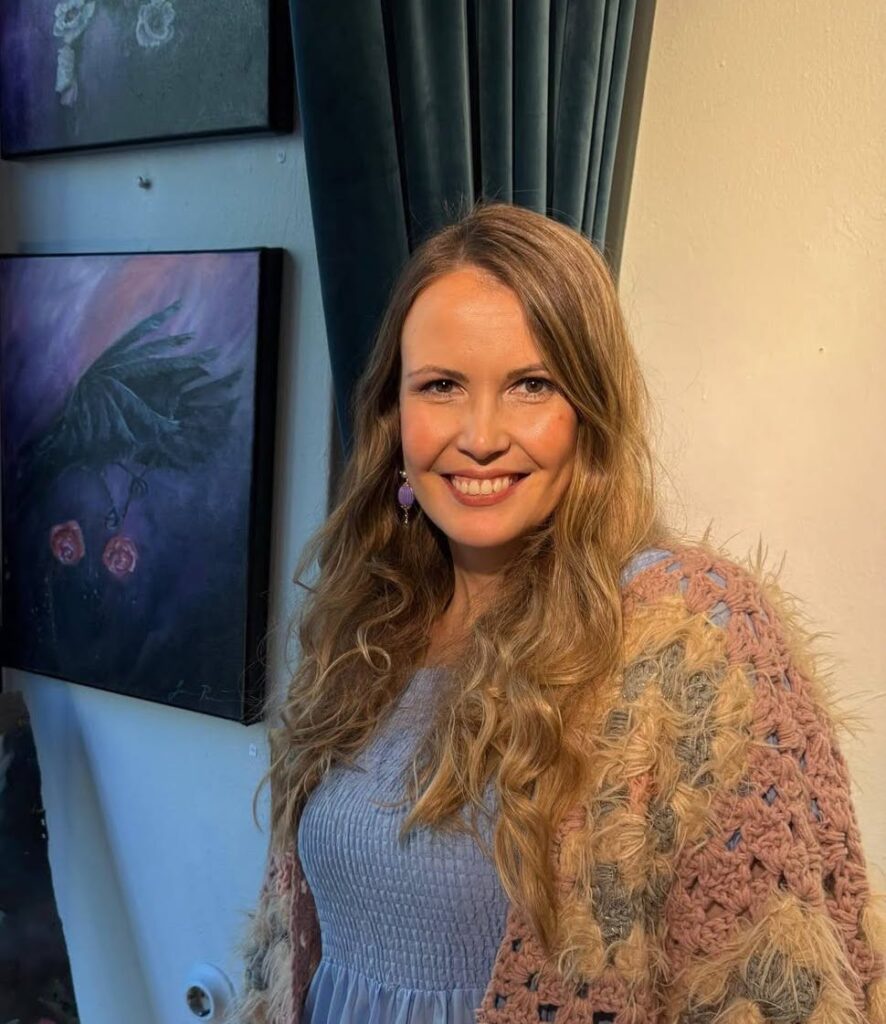
The Finnish artist enters the Neo-Stilnovist pictorial movement, bringing a sensitive language built around nature, fragility, memory and the emotional presence of the image.
The international development of Neo-Stilnovism continues through the inclusion of artists whose individual languages do not imitate one another, but converge around a shared idea: that figurative art can still carry emotional depth, symbolic meaning and a genuine relationship with the inner life of the human being.
Within this evolving context, Finnish artist Jonna Jokikunnas officially enters the Neo-Stilnovist pictorial movement.
Her inclusion introduces a distinctly Nordic sensibility into the movement: restrained, poetic, connected to nature and attentive to silence, vulnerability and the emotional condition of existence.
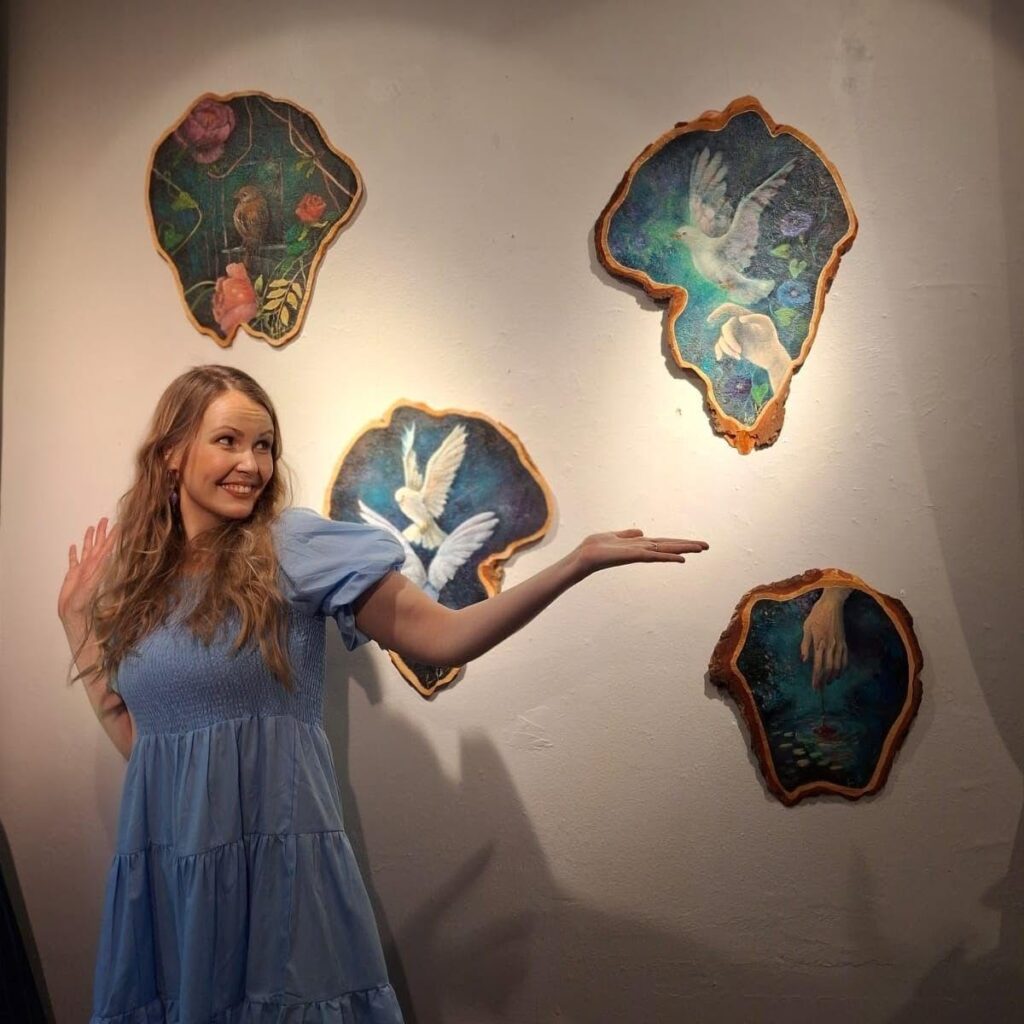
Jokikunnas develops her work through Poetic Canvas, her artistic platform, while a recent cultural listing by the City of Helsinki described her oil painting as a form of poetic realism concerned with the fragility of life, impermanence and the quiet power of nature. Her 2026 Love & Loss exhibition in Helsinki included works painted on wood, allowing the natural surface and structure of the material itself to participate in the image.
A Different Path Towards Neo-Stilnovism
To enter Neo-Stilnovism does not mean adopting the pictorial language of Carmelo Fabio D’Antoni.
It does not mean reproducing the Donna Angelo, copying a specific chiaroscuro or adopting predetermined iconography.
A living movement must allow differences.
What matters is a deeper correspondence.
In Jokikunnas, this correspondence can be found in the belief that the visible image can carry something beyond its immediate subject.
Nature does not remain landscape.
A face does not remain portrait.
An animal does not remain anatomical representation.
The visible becomes the threshold of an emotional condition.
This passage from representation to presence is one of the points at which her research can enter into dialogue with Neo-Stilnovism.
Poetic Realism
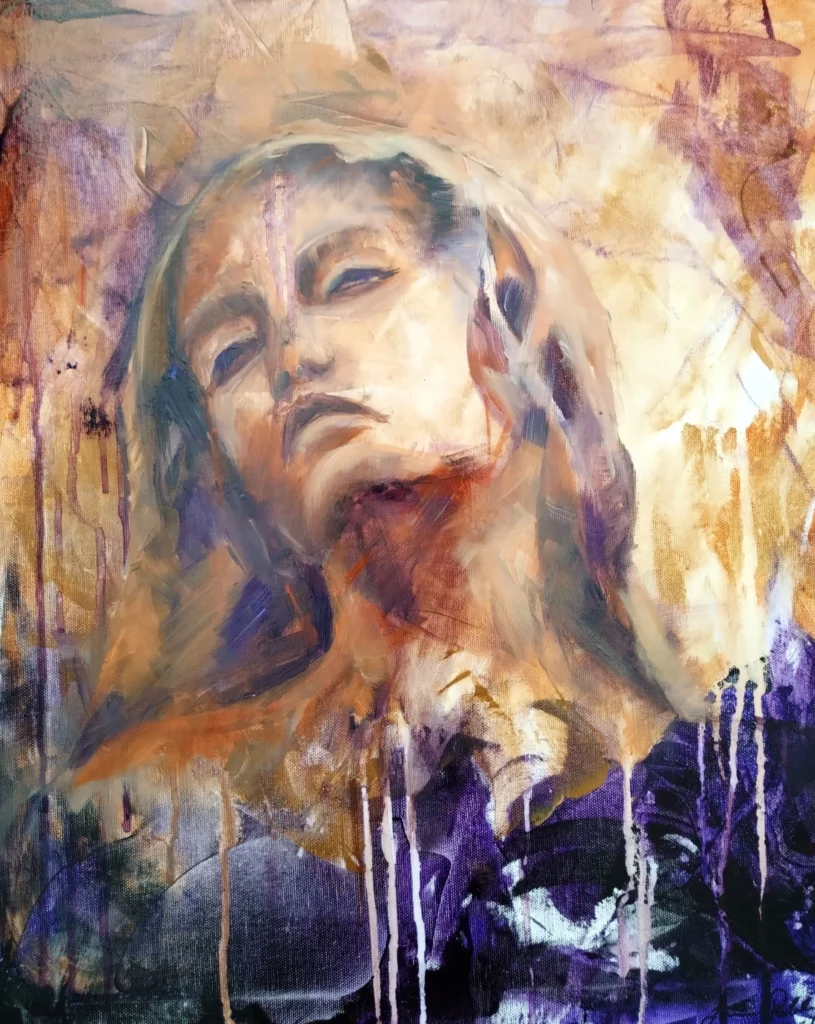
The definition of poetic realism is particularly useful when approaching Jokikunnas.
Realism ordinarily describes what can be observed.
Poetry transforms what has been observed into experience.
Between these two territories lies her painting.
The image retains recognisable reality, but reality is slowed down.
Silenced.
Charged with atmosphere.
The viewer is invited not merely to recognise what has been depicted, but to remain before it.
This is important.
Neo-Stilnovism is based on the conviction that an artwork should resist rapid consumption.
The image must possess enough interior density to continue existing after the first glance.
Nature as Presence
Nature occupies an important position in Jokikunnas’s research.
But it should not be interpreted merely as subject matter.
Nature can become a measure of time.
Growth.
Decay.
Loss.
Renewal.
Silence.
Human beings continually attempt to control time, while nature demonstrates another rhythm.
Leaves disappear and return.
Wood carries its history in its grain.
Animals inhabit a temporality different from our own.
A landscape changes without asking permission.
Within this dimension, nature becomes philosophical.
It reminds the spectator of impermanence.
And this relationship between beauty and transience places Jokikunnas’s work in a particularly interesting dialogue with Neo-Stilnovist thought.
Beauty Without Decoration
One of the essential principles of Neo-Stilnovism is that beauty should not be reduced to ornament.
Beauty has meaning only when it carries something.
Memory.
Pain.
Awareness.
Tenderness.
Mystery.
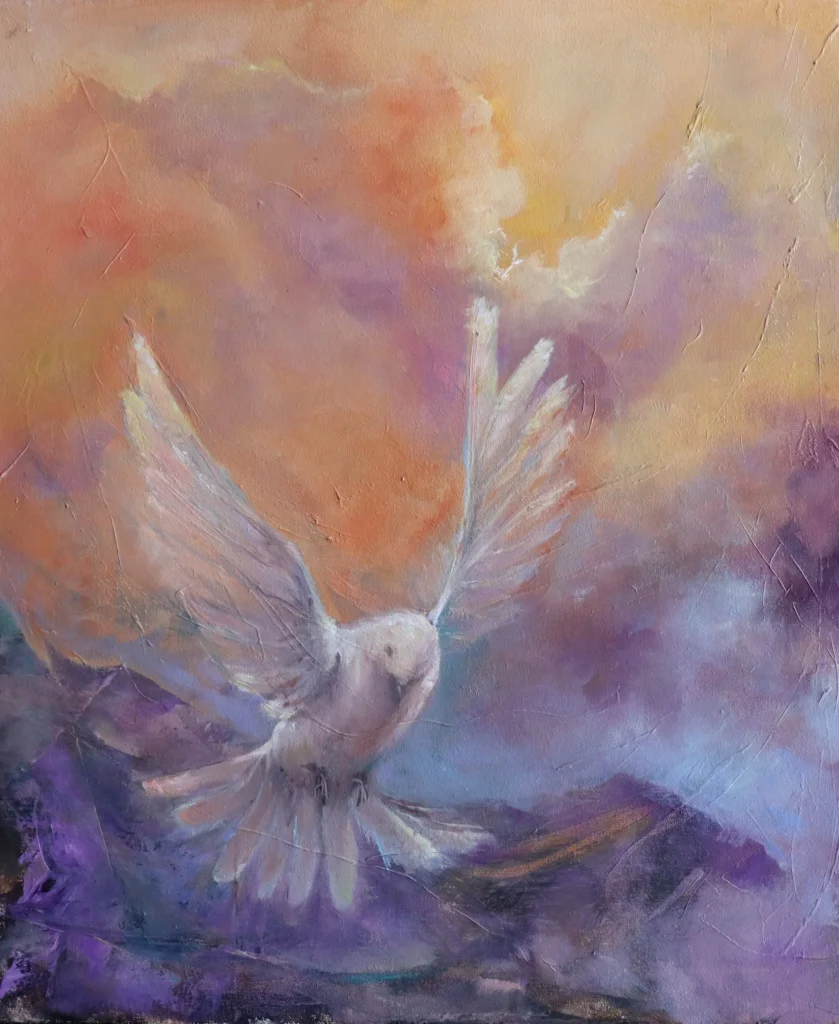
Jokikunnas’s poetic approach can be read through this distinction.
The lyrical quality of an image does not necessarily make it reassuring.
Beauty may contain loss.
A quiet landscape may contain absence.
A delicate figure may contain fragility.
The poetic image becomes powerful when beauty and vulnerability remain together.
Love and Loss
The title of Jokikunnas’s recent Helsinki exhibition, Love & Loss, identifies this duality with remarkable clarity.
Love implies attachment.
Loss reveals the fragility of that attachment.
One concept cannot entirely be separated from the other.
The City of Helsinki’s description of the exhibition emphasised precisely these themes: nature, relinquishment and love, while presenting Jokikunnas’s paintings as reflections upon the fragility and transience of life.
This emotional territory is significant for Neo-Stilnovism.
The movement does not understand elevation as the denial of suffering.
Elevation becomes meaningful because vulnerability exists.
Beauty matters precisely because it can disappear.
Matter and Memory
Painting on wood introduces another interesting element.
The support already possesses a history before the painting begins.
Grain.
Knots.
Irregularities.
Colour.
Texture.
The painter does not work on an entirely neutral surface.
She enters into dialogue with matter.
This approach echoes a broader Neo-Stilnovist concern with the physical construction of the artwork: support, material, pigment and surface are not merely technical necessities but part of the identity of the finished work.
Matter can carry memory.
The Image as a Place of Pause
Contemporary visual culture constantly accelerates.
Images arrive one after another.
They are viewed, replaced and forgotten.
Jokikunnas’s work operates according to another rhythm.
It asks for pause.
This may be one of the most important affinities with Neo-Stilnovism.
An artwork does not need to shout in order to be strong.
It may speak quietly and still remain.
Silence can possess authority.
A Nordic Voice Within an International Movement
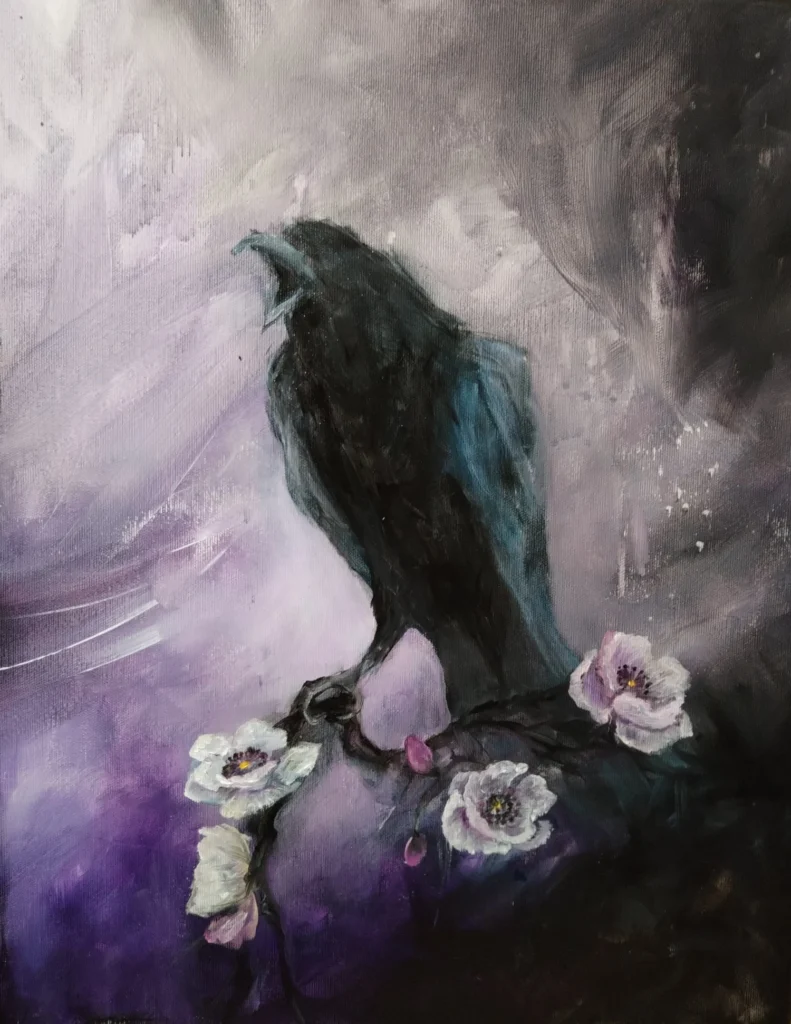
The arrival of Jokikunnas also contributes to the international dimension of Neo-Stilnovism.
The movement was born from an Italian cultural matrix deeply connected with the Dolce Stil Novo, Dante, symbolic femininity and the European figurative tradition.
But a contemporary movement cannot remain geographically closed.
Its principles must be capable of encountering different cultures.
Finland introduces another atmosphere.
Different light.
Different relationship with nature.
Different emotional restraint.
Different cultural memory.
This difference does not weaken the movement.
It expands it.
Individual Identity Must Remain Intact
A Neo-Stilnovist artist should remain recognisable as themselves.
This principle is fundamental.
Jonna Jokikunnas does not enter the movement to become another painter.
She enters it with her own language.
Her poetic realism.
Her relationship with natural forms.
Her sensitivity toward impermanence.
Her restrained emotional dimension.
The purpose of a movement should not be to erase individuality.
It should provide a cultural field within which individual research can enter into dialogue with shared principles.
A New Chapter
Jonna Jokikunnas’s entry into Neo-Stilnovism therefore represents more than the addition of another name.
It introduces another way of approaching presence.
If some Neo-Stilnovist images speak through myth, archetype, sacred light or dramatic chiaroscuro, Jokikunnas can approach the same fundamental question through silence and nature:
how can an image become more than what it represents?
Her answer appears to lie in poetry.
In fragility.
In the awareness that everything visible is temporary.
And therefore precious.
With Jonna Jokikunnas, Neo-Stilnovism encounters a Nordic language in which beauty does not dominate nature, but listens to it.
Her entry strengthens the idea of Neo-Stilnovism as an international movement built not upon stylistic uniformity, but upon different artistic voices united by the search for presence, meaning and inner truth.

Other Articles

The Atelier as a Place of Transmission: Where Technique Becomes Memory

No Comment! Be the first one.