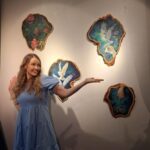

The Florentine artist and designer enters the Neo-Stilnovist movement with a research shaped by sculpture, installation, symbolism and a persistent dialogue between artistic form and contemporary conscience.
Neo-Stilnovism continues to expand not through stylistic replication, but through the encounter with artists capable of bringing autonomous research into dialogue with its cultural principles.
Luciano Manara officially enters the Neo-Stilnovist pictorial movement, introducing a very different language from those already present within it.
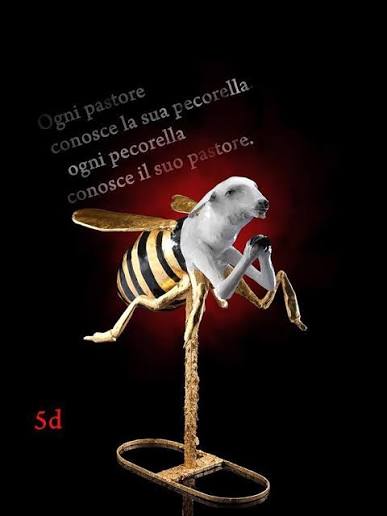
Manara’s artistic path is rooted not exclusively in painting, but in the relationship between design, sculpture, installation, symbolic construction and social reflection.
His official biography describes an initial background in design followed by a progressively more autonomous artistic practice, including sculptures, installations and wall-based works. It also identifies recurring alchemical and numerological symbols and an interest in using artistic form to confront contradictions within contemporary society.
It is precisely this combination of matter, symbol and ethical questioning that creates an interesting point of contact with Neo-Stilnovism.
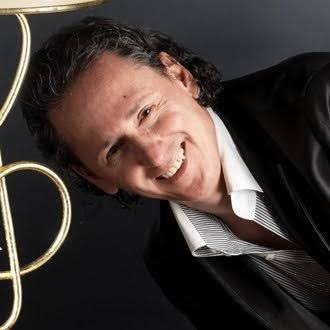
From Design to Artistic Language
Manara’s origins in design are significant.
Design teaches construction.
Relationship between form and function.
Material.
Space.
Balance.
But when the designer crosses into autonomous artistic research, these same tools can acquire another purpose.
The object no longer has to serve a practical function.
It can ask a question.
It can disturb.
It can become symbol.
Manara’s artistic trajectory reflects this transition.
Matter becomes communication.
The object becomes statement.
Art as an Ethical Act
One of the strongest affinities between Manara and Neo-Stilnovism concerns the idea that art should not be empty.
An artwork may be beautiful.
Technically refined.
Visually powerful.
But there remains another question:
Why does it exist?
Manara’s practice repeatedly engages with social, spiritual and human themes.
His official biography associates several works with reflections upon oppression, violence, war, social contradiction and contemporary forms of control, while also documenting works such as Il guardiano dell’anima, Mamma perdonami and a series of crucifix-related projects.
Whatever interpretation the viewer ultimately adopts, the intention is clear:
the artwork is expected to communicate.
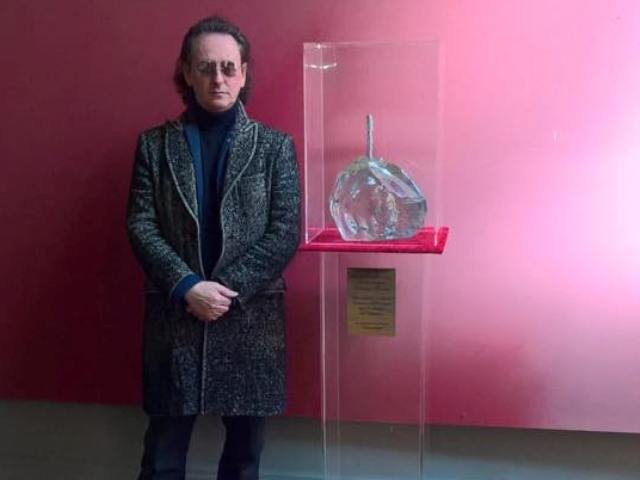
The Symbol Must Work
Symbolism is central to this process.
A symbol condenses.
It takes an object, gesture or form and allows it to contain more than its literal identity.
A cross is never merely two intersecting lines.
A stone can become permanence.
A pen can become thought.
A body can become sacrifice.
An object can become accusation.
Manara’s work frequently uses this mechanism.
This brings his research close to a central Neo-Stilnovist principle:
the visible form should open toward another level of meaning.
Alchemy and Hidden Structure
Manara’s official biography also notes the presence of alchemical and numerological references within parts of his work.
This is particularly relevant.
Alchemy is historically founded upon transformation.
Matter changes.
But symbolic alchemy goes further.
The transformation of matter becomes metaphor for the transformation of the human being.
This idea has obvious points of contact with Neo-Stilnovism.
The movement repeatedly returns to passage:
from appearance to interiority;
from matter to symbol;
from beauty to knowledge;
from image to presence.
The Object as Archetype
Neo-Stilnovism has frequently developed its archetypal language through the human figure.
Woman.
Queen.
Warrior.
Sibyl.
Mother.
Angel.
But archetype does not necessarily require the human face.
Objects can also become archetypal.
A cross.
A door.
A chain.
A stone.
A chair.
An instrument.
When removed from ordinary use and placed inside a precise artistic structure, the object can acquire another identity.
Manara brings precisely this possibility into the movement.
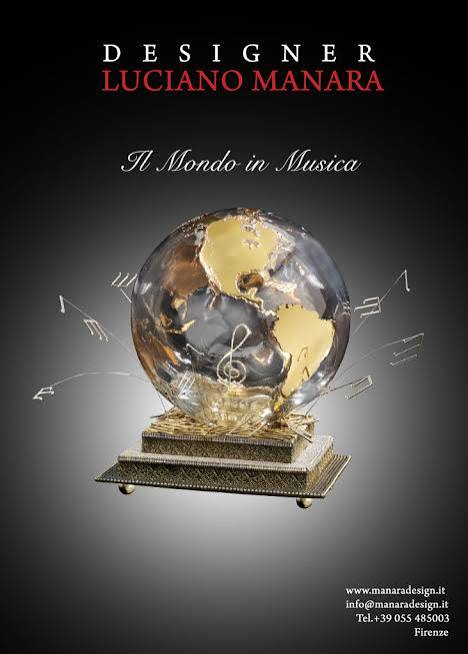
A Different Neo-Stilnovist Voice
This distinction matters because an artistic movement cannot grow if every participant is expected to resemble its founder.
Luciano Manara does not enter Neo-Stilnovism by imitating Carmelo Fabio D’Antoni.
His artistic grammar is different.
More object-based.
More sculptural.
At times more direct.
At times deliberately provocative.
Yet a shared territory can still be identified.
Symbol.
Human dignity.
Spiritual questions.
Ethical responsibility.
Tradition transformed rather than repeated.
The belief that art should contain meaning.
The Sacred as a Question
The sacred appears repeatedly within contemporary artistic practice, but it can operate in very different ways.
It does not always mean devotional art.
Sometimes the sacred is questioned.
Wounded.
Reconstructed.
Placed in contradiction with the contemporary world.
Manara’s recurring engagement with Christian imagery is particularly interesting from this perspective.
The symbol remains recognisable.
But its context changes.
The historical image enters contemporary tension.
This allows the sacred to become not merely inherited iconography, but an active question.
The Cross and the Human Condition
Few Western symbols carry the historical density of the cross.
Religion.
Death.
Sacrifice.
Redemption.
Violence.
Hope.
When contemporary artists return to it, they enter an enormous cultural archive.
Manara’s work uses such imagery not simply to reproduce tradition but to confront the present.
This corresponds to another Neo-Stilnovist principle:
tradition should not be copied.
It should be made active again.
Matter Has Weight
Sculpture introduces something painting can only simulate.
Physical weight.
Volume.
Occupation of space.
An object forces the viewer to move around it.
To confront its scale.
Its material resistance.
Its physical existence.
Manara’s inclusion therefore broadens the Neo-Stilnovist dialogue around presence.
Presence does not exist only through the painted gaze.
It can emerge from matter itself.
The Work and the Viewer
An installation changes the relationship with the observer.
The spectator does not simply stand before an image.
They may enter its space.
Move around it.
Encounter it almost physically.
This spatial dimension creates another way of understanding the Neo-Stilnovist concept of the work as threshold.
A threshold does not necessarily need to be painted.
It can be constructed.
Recognition and Public Trajectory
Manara’s official biography records solo and group exhibitions in Italy and abroad, and mentions the Collare Laurenziano, awarded in 2015 at Palazzo Vecchio by the Accademia Medicea. It also records Penna nella roccia as a work donated to the Regional Council of Tuscany in 2018.
These elements form part of an artistic path that developed independently before the encounter with Neo-Stilnovism.
And this independence is important.
The movement does not create Manara’s identity.
It receives an identity already formed.
Florence and the Memory of Tradition
There is also a geographical and cultural element.
Manara’s artistic biography is connected with Florence.
For Neo-Stilnovism, Florence possesses an unavoidable symbolic importance.
Dante.
The Dolce Stil Novo.
Humanism.
The Renaissance.
The relationship between beauty, thought and the human figure.
This does not automatically define an artist as Neo-Stilnovist.
But it creates an evocative cultural intersection.
The movement returns, through one of its new artists, to one of the cities most closely connected with the historical memory from which the name itself ultimately derives.
Neo-Stilnovism Beyond Painting
Luciano Manara’s inclusion also opens an important question for the future of the movement.
Can a pictorial movement dialogue with sculpture, installation and design?
It can, provided its identity remains clear.
“Pictorial” defines the historical and theoretical origin of Neo-Stilnovism.
It need not prevent dialogue with other forms when those forms share its deeper research.
A movement becomes culturally fertile when its principles can generate relationships beyond a single technique.
The Ethical Image
Perhaps the strongest meeting point between Manara and Neo-Stilnovism lies here.
Both reject the idea that art must be indifferent.
The artwork can ask the viewer to consider responsibility.
Human dignity.
Violence.
Memory.
Spirituality.
Power.
The meaning of symbols inherited from history.
This does not require the artwork to provide a simple answer.
It requires it to possess necessity.

Individuality Before Uniformity
Luciano Manara must therefore remain Luciano Manara.
This is essential.
Neo-Stilnovism should not transform his works into variations of another artist’s language.
His sculptural thinking, conceptual directness and relationship with symbolic objects represent precisely what he can contribute.
The shared movement provides dialogue.
Not homogenisation.
A Movement Expands Through Differences
The entry of Luciano Manara confirms another stage in the evolution of Neo-Stilnovism.
The movement increasingly presents itself as a field in which different artistic identities can converge around certain foundations without becoming identical.
Beauty.
Symbol.
Memory.
Technique.
Interior transformation.
Ethical consciousness.
The dignity of artistic creation.
Manara enters this field through matter.
Through the object.
Through contradiction.
Through symbols capable of confronting the present.
If Neo-Stilnovism asks art to recover meaning, Luciano Manara introduces a language in which meaning becomes physical: constructed, sculpted and placed directly before the viewer.
His entry therefore adds another dimension to the movement:
not only the image as presence, but matter itself as a bearer of conscience.

Other Articles