

The Woman Who Sees First
The Sibyl is one of the most fascinating female figures in Western culture.
She is not a queen.
Not a saint in the traditional sense.
Not merely a priestess.
She is above all the one who sees.
The Sibyl inhabits a threshold.
Between the present and what has yet to happen.
Between the visible and the invisible.
Between human speech and a form of knowledge that seems to come from elsewhere.
For this reason, her image has acquired different meanings across the centuries without ever losing its power.
Prophecy, after all, is not merely prediction.
It may also be the ability to perceive what others have not yet recognised.
Ancient Origins
Within Greek and Roman culture, Sibyls were figures associated with prophecy.
They did not necessarily form a single coherent tradition.
Different cultures attributed different names, locations and roles to them.
Cumaean.
Delphic.
Erythraean.
Libyan.
Persian.
Tiburtine.
And others.
Their authority did not arise from political power.
It arose from knowledge.
The Sibyl spoke because she saw.
And it is precisely this independence from conventional power that made her exceptional.

The Sibyl and the Threshold
Many traditions place the Sibyl in particular environments.
Caves.
Temples.
Underground spaces.
Places separated from ordinary life.
These locations perform an obvious symbolic function.
Knowledge does not always appear in full light.
It must be sought.
It requires descent.
Silence.
Waiting.
The cave therefore becomes a metaphor for deep consciousness.
To reach vision, one must enter within.
The Prophetic Voice
The Sibyl is not merely image.
She is voice.
Prophecy is spoken.
Transformed into words.
This makes her role even more complex.
Vision alone is not enough.
It must be translated.
Interpreted.
Communicated.
The Sibyl therefore becomes mediator.
Between what she sees and those who cannot yet see.
Female Knowledge
This is one of the archetype’s most important dimensions.
The Sibyl represents a form of female authority founded upon knowledge.
Not beauty.
Not physical force.
Not rank.
Her power derives from intuition.
The ability to read signs.
The depth of perception.
For this reason, she remains an extraordinarily modern figure.
The Cumaean Sibyl
Among the most famous is the Cumaean Sibyl.
Tradition connects her with Cumae and Roman culture, but above all with Aeneas.
In the Aeneid, she accompanies the hero into the world of the dead.
This is fundamental.
The Sibyl does not merely predict.
She guides.
She knows the path.
She can cross places the hero could not enter alone.
The prophetess therefore becomes a figure of passage.
A guardian of the threshold.
The Sibyl and Descent
The descent into the underworld may also be read symbolically.
To descend means confronting what normally remains hidden.
Memory.
Death.
Fear.
Destiny.
The Sibyl guides the protagonist through this territory because she possesses knowledge gained by looking beyond ordinary limits.
Her authority comes from experience of the threshold.
From Paganism to Christian Culture
One of the most surprising transformations of the Sibyl occurs within Christianity.
Figures originating in pagan traditions are gradually reinterpreted as anticipators of Christian revelation.
The Sibyl becomes a bridge.
Between classical culture and Christianity.
Between antiquity and new faith.
Between pagan prophecy and Christian readings of history.
This transformation demonstrates the extraordinary adaptability of the archetype.
Sibyls in the Middle Ages
During the Middle Ages, Sibyls continued to be represented and interpreted.
Their role evolved.
They might appear alongside prophets.
They could be regarded as witnesses to truths not yet fully revealed.
The prophetic woman therefore acquired new dignity within Christian imagination.
She was no longer necessarily marginal.
She could become a recognised bearer of knowledge.
Michelangelo and the Sistine Chapel
One of the most important representations of the Sibyls appears in the Sistine Chapel.
Michelangelo places them beside the Prophets.
It is an extraordinary decision.
The female figures occupy monumental space.
They are not decorative.
Not subordinate.
They are powerful.
Thoughtful.
Physical.
Concentrated.
Their presence communicates authority.
The Delphic Sibyl
Michelangelo’s Delphic Sibyl is one of the most famous examples.
The body turns.
The gaze opens towards something the viewer cannot see.
The figure seems to have suddenly perceived a revelation.
This is essential.
Knowledge is represented as an event.
Not static possession.
The Sibyl sees.
And the body responds to vision.
The Libyan Sibyl
The Libyan Sibyl also possesses extraordinary force.
Her body is monumental.
Muscular.
In movement.
She does not correspond in any way to the idea of a fragile prophetess.
Knowledge assumes physical form.
Wisdom has weight.
Vision has a body.
This makes the image strikingly modern.
The Book
In Renaissance representations, the Sibyl frequently appears with a book.
The symbolism is clear.
Knowledge.
Writing.
Memory.
Prophecy.
But above all, preservation.
The Sibyl does not merely receive knowledge.
She guards it.
Knowledge must be transmitted.
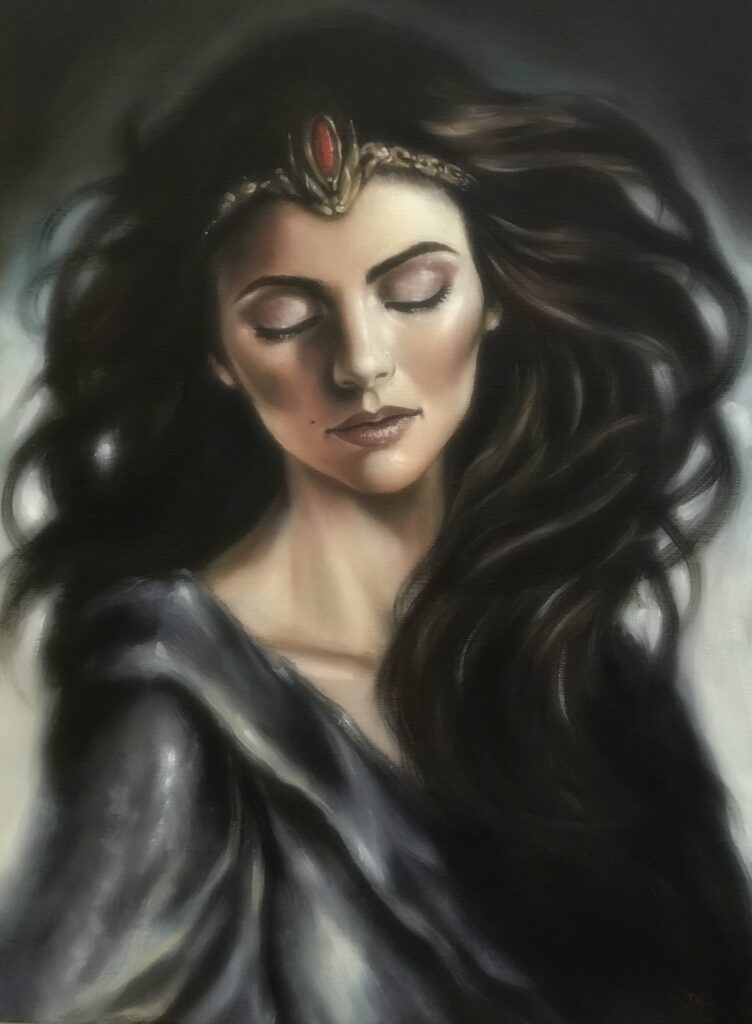
The Gaze
Here too the gaze becomes decisive.
Sibyls rarely seem to observe the ordinary world.
They look elsewhere.
Upwards.
Beyond the frame.
Into a book.
Into themselves.
This withdrawal of the gaze creates distance.
The figure is present, yet simultaneously connected with something outside the viewer’s space.
The Woman Who Knows
Perhaps this is the simplest and strongest definition.
The Sibyl is the woman who knows.
Not necessarily because she possesses every answer.
But because she perceives another level.
Her knowledge may be uncertain.
Obscure.
Difficult to translate.
Yet it exists.
And this awareness constructs her authority.
The Sibyl in Symbolism
The nineteenth century and Symbolism strongly revived oracular figures, priestesses, enchantresses and women connected with mystery.
The Sibyl naturally enters this world.
Prophecy becomes less strictly religious and more psychological.
The woman may become an image of intuition.
The unconscious.
Dream.
Hidden knowledge.
The ancient prophetess becomes modern again.
From Prophecy to Intuition
This transformation is important.
In contemporary culture, the Sibyl need not literally predict future events.
She may represent the ability to perceive first.
To recognise transformation.
To sense tension.
To see possibility.
Prophecy therefore becomes a metaphor for intuition.
And intuition becomes a form of knowledge.
The Sibyl and the Artist
From this perspective, the Sibyl shares something profound with the artist.
The artist looks at what everyone sees.
But attempts to see something else.
A future form.
A hidden face.
An image not yet existing.
Artistic vision and prophetic vision share an element.
Both attempt to make visible something not yet fully visible.
The Sibyl and Imagination
This relationship connects perfectly with the Neo-Stilnovist principle of imagination.
The Sibyl sees first.
The artist creates first.
Both operate at a threshold.
One between present and future.
The other between interiority and matter.
The Sibyl therefore becomes particularly fertile for Neo-Stilnovism.
Not only as iconographic subject.
As principle.
The Sibyl as Donna Angelo
Within Neo-Stilnovism, the Sibyl may be understood as one of the possible manifestations of the Donna Angelo.
Not because she is necessarily benevolent or religious.
But because she performs a mediating function.
She carries knowledge.
Questions.
Guides.
Opens possibility.
The Donna Angelo is not merely an aesthetic presence.
She may become a figure of knowledge.
The Sibyl makes this dimension explicit.
Mystery Is Not Ignorance
The Sibyl is also a figure of mystery.
But mystery does not mean ignorance.
It is what we do not yet fully understand.
Her presence reminds us that not everything must be immediately explained.
Within art, this principle is essential.
An artwork that reveals everything quickly exhausts itself.
An artwork that preserves an unresolved area remains alive.
Prophecy as Vision
Perhaps this is the most interesting way to understand the Sibyl today.
Not as a character who predicts the future with certainty.
But as a figure of vision.
The capacity to perceive transformation before it becomes obvious.
This applies to culture.
Society.
Art.
The individual.
The Sibyl becomes a symbol of that part of human consciousness that anticipates understanding.
Knowledge Has a Cost
Within mythology and literature, knowledge is rarely neutral.
Vision may isolate.
Knowing may become a burden.
The Sibyl sees what others do not.
For this very reason, she may appear distant.
Misunderstood.
Feared.
Knowledge produces authority.
But also solitude.
This makes the archetype even more complex.
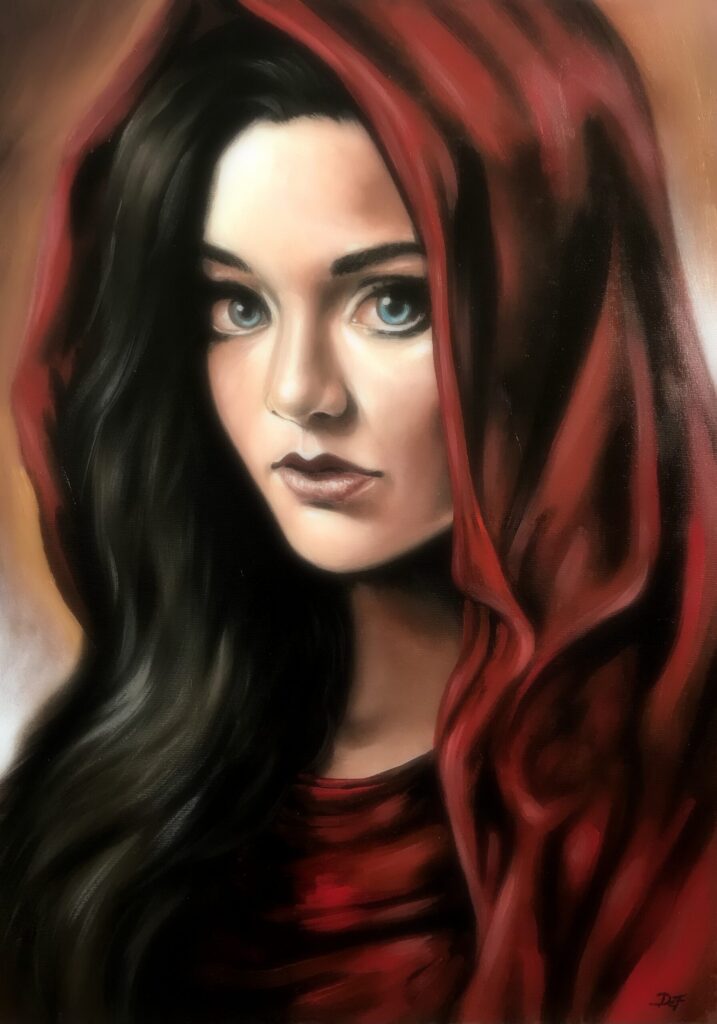
The Face of the Sibyl
A contemporary representation of the Sibyl should therefore contain more than beauty.
It should suggest listening.
Concentration.
Distance.
Memory.
As though the eyes were directed simultaneously toward the world and beyond the world.
No spectacular gesture is necessary.
A face that seems to know something we still ignore may be enough.
A Contemporary Figure
The Sibyl still speaks to the present because our age is saturated with information but often poor in interpretation.
We know many facts.
See countless images.
Receive constant news.
But understanding where all of this is leading is much more difficult.
The Sibyl symbolically represents precisely this faculty.
Not accumulating information.
Reading meaning.
From Knowledge to Responsibility
To see first also creates responsibility.
If the Sibyl recognises a sign, she must decide whether to communicate it.
If the artist perceives a vision, the artist must decide whether to give it form.
Knowledge does not remain entirely private.
It becomes relationship.
Here the archetype acquires an ethical dimension.
Knowledge does not exist merely to distinguish the person who possesses it.
It exists to transform.
The Sibyl in Neo-Stilnovism
Within Neo-Stilnovism, the Sibyl may therefore become a central figure.
Woman.
Visionary.
Guardian.
Interpreter.
Presence.
She may contain light and shadow.
Wisdom and unease.
Silence and word.
She is not simply an enchantress.
She is a figure of knowledge.
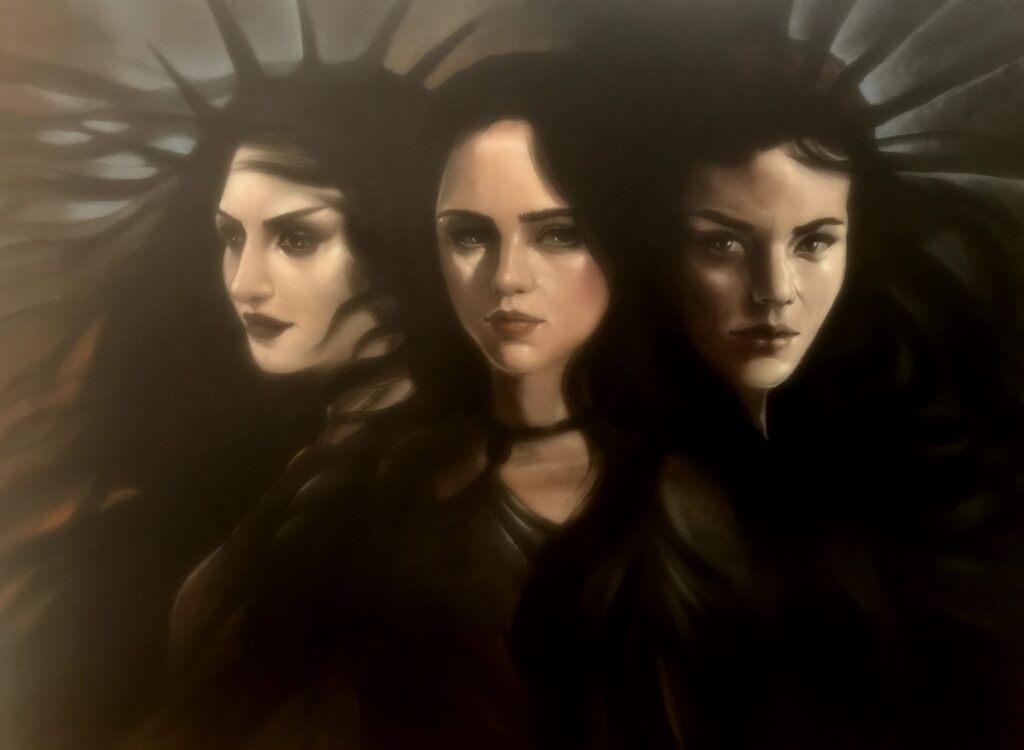
A face standing at the threshold.
Seeing What Has Yet to Emerge
The Sibyl has crossed art history because she embodies a question that has never ceased to matter.
Can we see beyond appearances?
Can we intuit what has not yet acquired form?
Can we transform the invisible into word or image?
Art itself continues to ask these questions.
This is why the Sibyl does not belong only to antiquity.
She continues to live whenever a figure looks beyond the present.
Prophecy does not consist in knowing what will happen, but in seeing before others what is already beginning to emerge.
From the caves of antiquity to contemporary ateliers, the Sibyl remains one of the most powerful images of female knowledge: a presence standing on the threshold between what is visible and what has yet to be revealed.

Other Articles

The Face as a Threshold: Building a Gaze That Has Presence
Imagination as the Origin of the Artwork: Creating Before Seeing